For many customers, WhatsApp is the easiest way to contact a business. But enquiries arrive at all hours, often while your team is busy — and a customer who waits too long for a reply may simply message someone else.
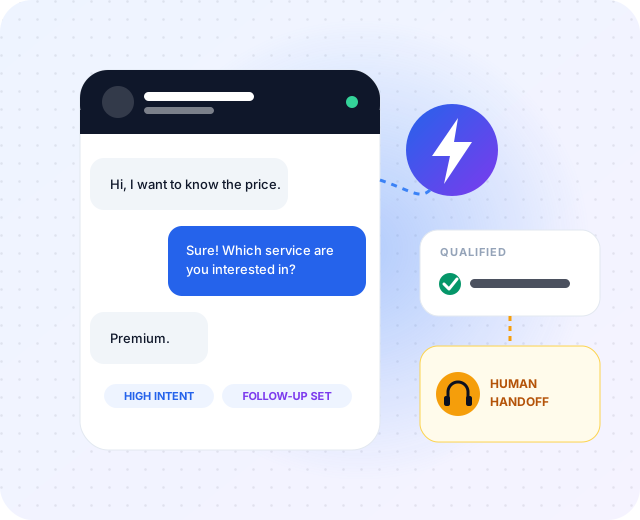
Many of those messages are the same: price, availability, location, timings. Automation answers these instantly, captures the customer's details and asks the questions your team would normally ask, so every enquiry arrives qualified and organised instead of scattered across phones.
It also follows up. Prospects who go quiet get a polite reminder instead of being forgotten. And when a conversation needs a person — a complex request, a sensitive question — it's handed to your staff with the context attached. Automation doesn't guarantee a sale; it makes sure no enquiry is ignored.
Structure is what makes this reliable rather than random. A conversation flow decides what to ask first, what to answer directly and what to escalate, so two customers asking the same question get a consistent, accurate response instead of whatever an individual staff member happens to remember that day. Lead routing then sends each qualified enquiry to the right place — by service, location or urgency — so it doesn't sit unread in a shared inbox. The aim is not to remove people from the conversation, but to make sure the parts that don't need a person happen instantly, and the parts that do reach the right person with the context already attached.